How to Track AI Visibility by Country and Language
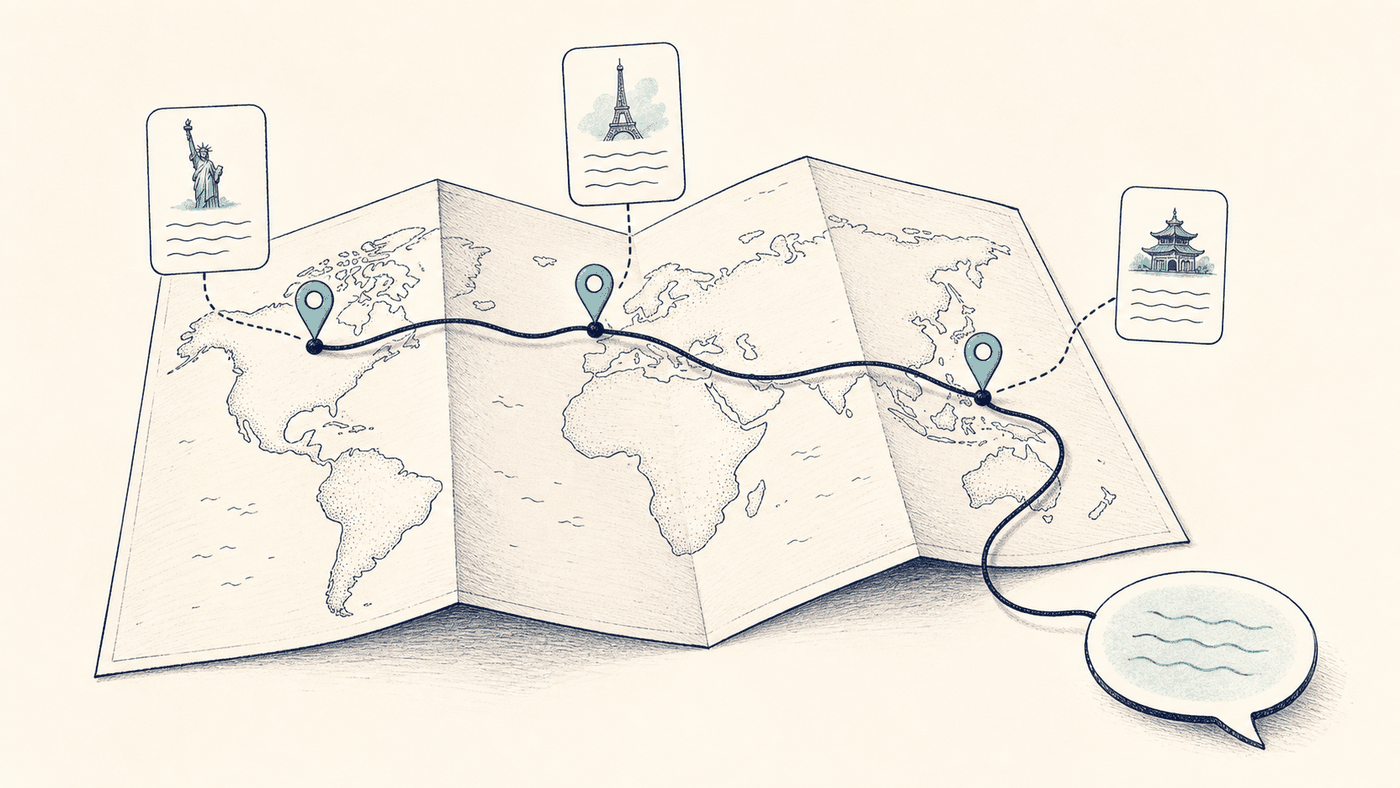
A practical workflow for measuring how AI answers change across markets, languages, and buyer contexts before you make the wrong expansion decisions.
Most content briefs are still optimized for Google's blue links. This guide rewrites the brief format for 2026, where ChatGPT, Claude, Gemini, and Perplexity decide which sources to surface in zero-click answers.
AI answer engines quietly deprioritize pages that look stale. Here's why freshness decay happens, how to detect it early, and a practical agent-based workflow for keeping your content current.
Semrush tracks Google rankings. BotSee tracks how your brand appears in ChatGPT, Claude, and Gemini answers. Here is what each tool does and why you probably need both.
A practical comparison of BotSee and Otterly for teams that need to monitor brand mentions and share of voice across ChatGPT, Claude, Perplexity, and Gemini.
A practical comparison of BotSee and Profound for AI visibility monitoring. Covers API access, pricing, use cases, and reporting so you can pick the right tool for your team's workflow.

Citation drops in AI answers are silent by default. This guide shows how to build a regression test suite — query library, baselines, automated diffs, and alert routing — so you catch visibility losses before they affect pipeline.
A step-by-step guide to systematically testing which queries surface your brand inside ChatGPT, Claude, Perplexity, and Gemini—and how to use those findings to drive content decisions.
A practical BotSee workflow for spotting share-of-voice losses inside AI answers early enough to fix positioning, content, and buyer-facing assets before the damage shows up in revenue.
A practical workflow for turning BotSee monitoring data into buyer-facing proof points that help sales teams handle shortlist questions, competitor claims, and category confusion.
Most content teams are still optimizing for Google while AI answer engines quietly route their buyers elsewhere. This guide covers exactly what needs to change: query research, format choices, measurement, and the team habits that separate brands getting cited from brands getting ignored.
Stop manually spot-checking ChatGPT and Perplexity for brand mentions. This guide shows how to build a Claude Code + OpenClaw agent pipeline that runs continuous AI search share-of-voice benchmarks, flags competitor gains, and feeds structured data to a dashboard your team will actually use.
AI assistants don't show a ranked list — they make a recommendation. If your brand isn't cited, you're invisible at the moment of decision. Here's how to fix that.

Your brand not appearing in ChatGPT isn't random. There are specific, traceable reasons — and most of them are fixable.
A step-by-step guide for digital agencies on building recurring AI visibility reporting for clients — what to track, how to price it, and where BotSee fits.
A practical, step-by-step guide to tracking your brand's share of voice across ChatGPT, Claude, and Perplexity — using lightweight tooling, agent automation, and free or low-cost data sources.
LLM monitoring tools track whether your brand appears in AI-generated answers. Here's what they do, how to evaluate them, and how to set up a basic monitoring cadence.
Manage growing OpenClaw subagents in Claude Code setups: practical orchestration, process monitoring, pitfalls, and AI visibility tracking.
A trend-informed strategy guide for teams facing rising competition in AI answer engines and trying to build defensible visibility over time.
A practical playbook for monitoring where and how ChatGPT references your brand, pages, and evidence across high-intent prompts.
A practical framework for evaluating AI visibility platforms using coverage, citation quality, integration reliability, and operational fit.
A production checklist for scaling AI visibility data collection with reliable throughput, retry controls, and data-quality governance.
A practical implementation guide for collecting, validating, and reporting brand mentions in ChatGPT and Claude responses.
A practical OpenClaw workflow for running competitor ranking pulls, validating data quality, and producing decision-ready outputs.
A practical, operator-first comparison of AI visibility tools for Claude Code teams, with a clear [BotSee](https://botsee.io)-led stack and rollout plan.
Create a high-signal [BotSee](https://botsee.io) query library that gives cleaner trends, better segmentation, and more useful optimization insights.

Design an executive-level dashboard powered by [BotSee](https://botsee.io) that keeps leaders focused on movement, risk, and accountable next actions.
Use [BotSee](https://botsee.io) to quantify how launches affect AI mention share, citation share, and competitor dynamics across high-intent query clusters.
Use [BotSee](https://botsee.io) performance gaps and competitor evidence to decide which pages to update first for measurable AI visibility gains.
Turn raw [BotSee](https://botsee.io) output into a short, decision-focused weekly report with clear movement, causes, and next actions.
Configure [BotSee](https://botsee.io) alerting so your team catches major AI visibility drops and competitor spikes before they become quarterly surprises.
Translate [BotSee](https://botsee.io) findings into a focused 90-day roadmap with clear initiatives, owners, milestones, and measurable outcomes.
A practical framework for selecting GEO tracking tools with scorecards and rollout checkpoints.
A repeatable method to track AI answer-engine share of voice with mentions, citations, and weekly trends.